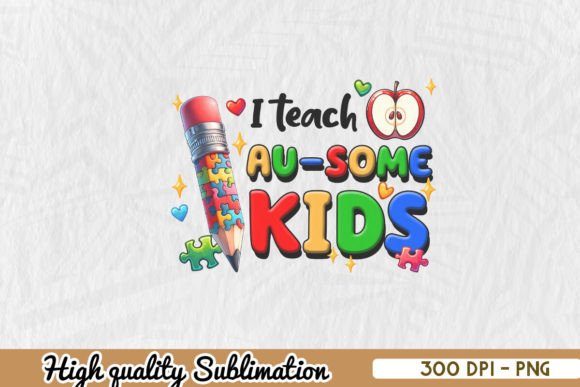
I Teach Au-some Kids PNG: An Embroidery Review
As a professional embroidery digitizer and product reviewer, I approach every new graphic asset with a specific question: will this actually stitch out well, or is it just a pretty picture? When evaluating the I Teach Au-some Kids Autism Teacher PNG, my focus shifts immediately from digital aesthetics to physical application. This file is marketed as a high-quality graphic for printing and transfers, but for those of us in the Crafts industry who specialize in thread and textile, its value lies in its potential as a foundation for custom apparel and personalized gifts. After analyzing the layout, typography, and thematic elements, I see this design as a strong candidate for teacher appreciation merchandise, provided you understand how to translate a flat raster image into a dimensional embroidered reality.
Translating Digital Graphics to Stitched Reality
The first impression of the I Teach Au-some Kids Autism Teacher PNG is one of warmth and inclusivity. The visual personality is friendly yet professional, striking a balance that is essential for school environments and special education settings. As a Graphics asset, the lines appear clean and the composition is centered, which is exactly what we look for before opening digitizing software. However, because this is a PNG rather than a native embroidery file, it requires careful interpretation. The bold lettering suggests it was designed for visibility, which translates beautifully to satin stitch columns or dense fill stitch areas. The puzzle piece motif or heart accents often associated with this theme provide excellent opportunities for color blocking, allowing you to utilize specific thread colors that represent neurodiversity awareness without losing legibility.
For an Etsy seller or small shop product creator, this design offers immediate recognition. Parents and educators connect emotionally with this messaging. When rendered in thread, the tactile nature of embroidery elevates the sentiment far beyond a standard screen print. The design’s layout allows for versatile placement, making it suitable for left-chest logos on polos or large center-chest statements on hoodies. It feels like a design meant to be worn with pride, not just displayed.
Real-World Application: The Custom Sweatshirt Test
To truly evaluate this asset, I mentally placed it in a real-life production scenario: creating a custom crewneck sweatshirt for an end-of-year teacher gift. In this context, the I Teach Au-some Kids Autism Teacher PNG serves as the perfect centerpiece. Sweatshirt fleece is a stable, forgiving fabric that handles moderate stitch density well. For this project, I would envision converting the text into a raised satin stitch to give it a varsity-style pop, while keeping any intricate icons in a lighter running stitch or applique to prevent the garment from becoming too stiff.
This specific use case highlights why this graphic works for commercial embroidery. Teachers are a niche market with high repeat purchase potential for classroom sets or department gifts. A finished sweatshirt featuring this design communicates thoughtfulness and quality. Unlike generic clip art, this specific phrasing targets a dedicated community. If you are running a craft business, offering this as a customizable option—perhaps adding the teacher's name or school year below the main graphic—increases the perceived value of the handmade product. The emotional resonance of the "Au-some" pun combined with premium stitching creates a personalized gift that buyers trust and are willing to pay a premium for.
Navigating Fabric Limitations and Hoop Constraints
While the design is versatile, practical judgment dictates where you should exercise caution. Not every substrate is appropriate for this level of detail. If you are planning baby embroidery or items for children with sensory processing sensitivities, you must modify the approach. Standard fill stitches can be scratchy against sensitive skin. In these cases, consider using the I Teach Au-some Kids Autism Teacher PNG as a guide for a reverse applique or a softer thread alternative, ensuring the back of the embroidery is smooth.
Be mindful of your hoop size when working with smaller items like caps or tote bag pockets. The horizontal span of the phrase "I Teach Au-some Kids" may exceed standard 4x4 hoop dimensions. Attempting to shrink the design too much to fit a small area will result in illegible text and thread breaks. For tote bag design projects, canvas is ideal, but if you are stitching on thin, stretchy knits or dark fabrics, the stabilizer choice becomes critical. A cut-away stabilizer is non-negotiable for knit apparel to prevent distortion during the stitching process. Always test on scrap fabric first; what looks crisp on a computer screen can become muddy on textured terry cloth or pique mesh if the stitch compensation isn't adjusted correctly.
Professional Standards for Business Growth
Using the I Teach Au-some Kids Autism Teacher PNG effectively impacts more than just the final stitch-out; it influences buyer engagement and brand consistency. High-quality execution builds customer trust. When a client sees clean registration, appropriate underlay, and vibrant color contrast, they recognize professionalism. This design asset supports that standard when used correctly. For digital product sellers creating listings, use this PNG to generate accurate printable mockups that reflect the true scale and proportion of the intended embroidery. Misleading customers with digital-only previews when selling physical goods leads to returns; showing a realistic representation of the stitched design aligns expectations.
Furthermore, consider the licensing and commercial rights associated with this file. Before listing any finished product or selling a digitized version as a digital embroidery file, verify the terms. Many designers allow for physical sales but prohibit reselling the digital assets themselves. Respecting these boundaries protects your business reputation within the maker community. Whether you are producing holiday embroidery for staff parties or year-round boutique items, adhering to ethical sourcing ensures your creative enterprise remains sustainable and respected.
Essential Designer Notes for Success
Before you load your needle, keep these practical tips in mind to maximize the potential of this design:
- Verify Compatibility: Since this is a PNG, confirm you have the software or service required to convert it into a machine-readable format like PES, DST, or JEF before purchasing.
- Contrast Check: Test the design in black and white during the digitizing phase to ensure the "Au-some" wordplay remains readable regardless of the color palette chosen.
- Stabilizer Strategy: Match your stabilizer weight to the fabric texture; heavy denim needs different support than lightweight cotton jersey.
- Detail Inspection: Zoom in to check for tiny elements that might need to be simplified or removed to prevent needle damage or fabric perforation.
- Mockup Accuracy: Use the original high-resolution PNG to create marketing materials, but always pair them with photos of actual stitch-outs for transparency.
- Wash Testing: If creating items for frequent laundering like aprons or kitchen towels, ensure the stitch density is sufficient to withstand wear without puckering.
Ultimately, the I Teach Au-some Kids Autism Teacher PNG is a valuable asset for the thoughtful maker. It bridges the gap between digital convenience and handmade heritage. By applying professional embroidery standards to this graphic, you transform a simple file into a meaningful, durable, and marketable product that celebrates educators in a tangible way. Approach the digitizing process with patience and respect for the medium, and your results will reflect the same dedication that the teachers themselves bring to their classrooms every day.