I'm a Teacher, I Know Things: Embroidery Review
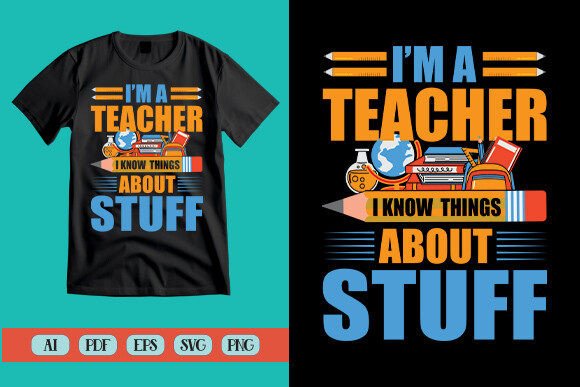
As a designer who has digitized and stitched countless teacher appreciation gifts, I approach the "I m a Teacher, I Know Things About Stuff" design with a specific set of expectations. This phrase has become a staple in the education community, balancing professional pride with self-deprecating humor. When evaluating this graphic for real-world application, my primary concern is not just how it looks on a screen, but how it translates into a tangible machine embroidery design that holds up to washing, wearing, and the scrutiny of detail-oriented educators.
The visual personality of this design typically leans toward bold, collegiate, or retro typography. It creates an immediate mood of confident competence mixed with playful exhaustion. For an Etsy seller or craft business, this emotional connection is vital. However, because this product is listed under Graphics and includes vector formats like AI, EPS, SVG, and PDF rather than pre-digitized DST or PES files, we must treat this as a high-quality source asset. The inclusion of "100 Color Changeable" options suggests immense versatility, but it also places the responsibility of proper digitizing and color mapping squarely on the maker. Before you hoop a single piece of fabric, you must verify that your specific embroidery file conversion maintains the integrity of these vector lines.
Real-World Application: The End-of-Year Tote Bag Test
To truly evaluate this design, I mentally placed it on a canvas tote bag intended as an end-of-year gift for a middle school teacher. Totes are high-stress items; they carry heavy books, water bottles, and grading materials. A flimsy design will distort or pucker under this weight. In this scenario, "I m a Teacher, I Know Things About Stuff" needs to be anchored securely.
If utilizing the provided graphics to create a custom tote bag design, I recommend avoiding a simple running stitch outline. Instead, consider converting the text into a filled satin stitch or a textured fill stitch to provide durability. The phrase "About Stuff" offers a perfect opportunity for creative thread play. While the main text might be a classic navy or black, the word "Stuff" could utilize a variegated thread or a contrasting accent color to highlight the humor. This small adjustment elevates the item from a generic print look to a premium handmade product. Customers recognize this extra effort, and it directly impacts the perceived value of your small shop product.
Fabric Considerations and Stitch Integrity
This design’s performance varies drastically depending on the substrate. As a reviewer, I have seen similar typographic designs fail on stretchy knits because the digitizer did not account for fabric push-and-pull. If you are planning sweatshirt embroidery using this graphic, stabilization is non-negotiable. You must use a cut-away stabilizer to prevent the letters from sinking into the fleece or distorting after the first wash.
Conversely, if applying this to a woven cotton tea towel or apron, the challenge shifts to density. Woven fabrics can handle higher stitch density, but too much ink coverage makes the fabric stiff and unappealing. Since the source files allow for color changes, test a low-density fill version first. The goal is a soft hand-feel, especially for custom apparel that teachers will actually want to wear during summer break. Always check the fabric texture before committing; a highly textured linen might swallow thin serifs or delicate details within the lettering, requiring a bolder adaptation of the original graphic.
Navigating Small Hoops and Detailed Text
One of the most common pitfalls with phrase-based designs is sizing. "I m a Teacher, I Know Things About Stuff" is a long sentence. Cramming this into a 4x4 hoop size often results in illegible text and excessive jump stitches. From a production standpoint, I advise against miniaturizing this design beyond a certain threshold. If you need a smaller footprint for a pocket logo or baby bib, consider isolating just "Teacher" or "Know Things" rather than forcing the full phrase.
For baby embroidery or smaller accessories, where safety and comfort are paramount, ensure there are no rough backing knots or dense clusters that could irritate skin. The vector nature of the source files is an advantage here; you can scale elements down cleanly before digitizing, unlike raster images that pixelate. However, always inspect tiny lettering on scrap fabric first. What reads clearly at 3 inches on a monitor may become a muddy line of thread at 0.5 inches on fabric. If the details are lost, simplify. A clean, readable design always outsells a detailed but messy one.
Commercial Viability and Professional Presentation
For those selling finished goods, this design strikes a strong balance for commercial embroidery. It targets a passionate niche with high repeat purchase potential. Teachers buy for themselves, colleagues buy for each other, and parents buy for instructors. To maximize buyer engagement, your printable mockup must accurately represent the stitch texture. Do not simply overlay the PNG file onto a shirt image. Use actual stitch simulations or, better yet, photograph a physical sample. Trust is built when the customer sees exactly what the thread colors and texture will look like in person.
Regarding licensing and usage, the product description lists digital clip art files suitable for various uses. As a responsible business owner, you must confirm the specific commercial license terms included with your download. Can you sell the digitized embroidery file itself, or only the physical finished product? Clarifying this protects your shop from infringement issues. Furthermore, because the package includes AI and EPS files, you have the freedom to modify the layout. Adding a personalized name below "Stuff" transforms a standard stock design into a unique personalized gift, significantly increasing its marketability compared to unaltered assets.
Designer Notes for Successful Execution
Before listing this design in your shop or stitching it for a client, run through this practical checklist derived from professional experience:
- Test on Scrap Fabric: Never stitch the final project without a test run on similar material to check tension and registration.
- Verify Contrast: Ensure thread colors pop against both light and dark backgrounds; white text on cream fabric often disappears.
- Check Stabilizer Pairings: Match your stabilizer weight to the fabric and stitch density to prevent puckering.
- Inspect Jump Stitches: Optimize the digitizing path to minimize trims, especially between the words "Teacher" and "Know."
- Review Licensing: Double-check if the "100 Color Changeable" clause applies to resale of digital derivatives or physical goods only.
- Mockup Accuracy: Create realistic previews that show stitch direction and texture, not just flat vector overlays.
- Wash Test: Launder your sample to ensure the design doesn't shrink or distort differently than the base garment.
Ultimately, "I m a Teacher, I Know Things About Stuff" is more than just a catchy slogan; it is a versatile foundation for meaningful projects. Whether you are creating holiday embroidery for staff parties or stocking your online store with back-to-school gear, success lies in respecting the technical requirements of embroidery. By treating the provided graphics as a starting point for quality craftsmanship rather than a quick fix, you honor both the medium and the message. The result is a product that teachers will cherish, wear, and trust—a true testament to the intersection of thoughtful design and skilled execution.