Preschool Teacher Leopard Sublimation Review
As a designer who constantly bridges the gap between digital graphics and tangible textiles, I approach every new asset with a specific question: will this actually work in production? When evaluating the Preschool Teacher Leopard Sublimation file, my mind immediately shifts from screen pixels to stitch paths and fabric behavior. While this product is marketed as a 300DPI PNG for sublimation on t-shirts, mugs, bags, and pillows, experienced makers know that high-resolution graphics are often the secret weapon for mixed-media embroidery projects. In the world of Crafts and Graphics, versatility is currency, and understanding how this leopard print aesthetic translates to physical products is essential for any Etsy seller or small business owner.
First Impressions and Visual Personality
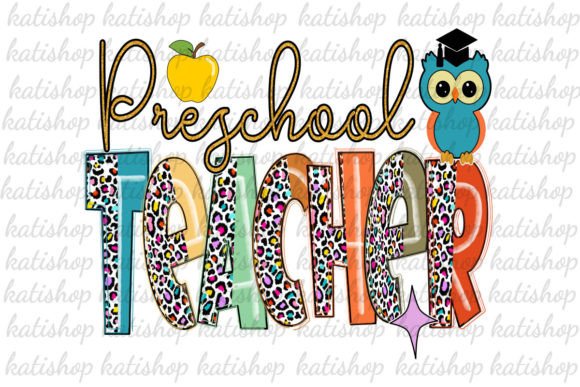
My initial assessment of the Preschool Teacher Leopard Sublimation design reveals a playful yet controlled aesthetic. The leopard motif strikes a difficult balance; it is trendy without being chaotic, which is crucial when designing for educators. Visually, the layout suggests a bold focal point rather than an all-over repeat. For an embroidery designer, this negative space is just as important as the printed area. It tells me exactly where a monogram, name, or school logo could be stitched to complement the graphic rather than compete with it. The mood is energetic but professional, making it suitable for both classroom wear and casual boutique merchandise. As a digital embroidery file source or sublimation base, it offers strong visual hierarchy that guides the eye naturally toward personalization areas.
Real-World Application: The Custom Educator Tote
To truly judge the utility of this asset, I mentally prototyped a custom embroidered tote bag intended as an end-of-year gift for a preschool teacher. This is a classic handmade product scenario where durability and aesthetics must coexist. Canvas tote bags have significant fabric texture, which can sometimes obscure fine details in pure embroidery. By using the Preschool Teacher Leopard Sublimation as the primary background element, I can achieve vibrant color coverage that thread alone cannot replicate efficiently.
In this real-life case, I would print the leopard design onto the canvas first. Then, utilizing my machine embroidery design software, I would digitize a coordinating satin stitch border or a running stitch outline over the printed area to add tactile dimension. This hybrid approach elevates the finished product from a simple printed bag to a premium personalized gift. Customers perceive higher value in items that combine techniques. For a craft business, this reduces stitch count and production time while increasing the perceived luxury of the item. The 300DPI resolution ensures that even if the ink bleeds slightly into the canvas weave during heat pressing, the edges remain crisp enough to serve as a registration guide for subsequent embroidery alignment.
Navigating Fabric Choices and Technical Constraints
While the Preschool Teacher Leopard Sublimation is versatile, it demands respect for material limitations. Not every substrate in your shop inventory is a candidate for this specific graphic. I advise caution when applying this to textured fabrics like linen or heavy slub cotton. The intricate spots characteristic of leopard patterns can get lost in the weave, resulting in a muddy appearance after washing. Smooth, poly-coated surfaces or tight-weave cottons are non-negotiable for maintaining the integrity of the 300DPI detail.
Furthermore, consider the stretch factor. If you are adapting this for sweatshirt embroidery or custom apparel made from performance blends, the image may distort during the hooping process. Unlike a vector-based embroidery file that scales mathematically, a raster PNG distorts physically. Always test on scrap fabric identical to your final project. For dark fabrics, remember that standard sublimation requires white or light backgrounds. If you intend to use this on navy or black garments, you must employ white toner transfer or DTF methods, or restrict the design to white applique patches that are then embroidered onto the dark garment. Ignoring these constraints leads to wasted blanks and frustrated clients.
Strategic Placement and Design Integrity
Placement dictates success. When integrating Preschool Teacher Leopard Sublimation into commercial embroidery projects, avoid high-friction zones. While the graphic looks fantastic on a pillow cover or tea towel, placing it near the bottom hem of a tote bag or the cuff of a sleeve invites premature wear. Sublimation ink bonds to fibers, but abrasion can fade the vibrancy over time. For baby embroidery or items requiring frequent laundering, ensure the design is positioned centrally where mechanical agitation is less aggressive.
Also, be mindful of curved surfaces. Caps and hats present unique challenges for flat PNG files. Unless you have specialized software to warp the image to match the cap’s curvature, the leopard pattern may appear distorted at the edges. In such cases, I recommend using the graphic as a flat patch backing or limiting its use to flat-brimmed caps. For nursery decor or holiday embroidery, the flat application is ideal, allowing the full resolution to shine without geometric correction.
Enhancing Value Through Mixed Media Techniques
The true power of this asset lies in its ability to enhance traditional needlework. As an applique design foundation, it saves hours of filling large areas with fill stitch. Imagine a preschool teacher sweatshirt where the leopard print provides the color field, and a plush chenille letter is embroidered directly on top. The contrast between the smooth sublimated ink and the raised texture of the embroidery creates a sensory experience that boosts buyer engagement. This technique also significantly lowers stitch density, reducing needle breaks and thread consumption.
For Etsy sellers and digital product sellers, this graphic serves dual purposes. Beyond physical production, the high-resolution PNG is perfect for creating printable mockups. Before committing to stitching, overlay digitized text or simulated stitches in your design software to visualize the final outcome. This allows for rapid iteration of custom apparel concepts without wasting stabilizer or thread. Presenting these polished mockups to clients builds trust and professionalism, demonstrating that you have thoughtfully considered how the Preschool Teacher Leopard Sublimation interacts with their specific branding needs.
Critical Designer Notes for Production Success
Before adding this to your next embroidery project lineup, adhere to these practical checkpoints:
- Verify Licensing: Confirm whether the purchase includes rights for commercial embroidery or only for sublimation. Using a graphic for stitched goods often requires different permissions than printing.
- Test Color Contrast: Leopard prints often contain mid-tone browns and tans. Ensure your chosen thread colors provide sufficient contrast against these tones so text remains legible.
- Stabilizer Selection: When combining sublimation with embroidery, use a cut-away stabilizer to prevent the printed fabric from shifting under the needle tension.
- Mockup Validation: Always view the design in black and white before production. If the pattern disappears in grayscale, it lacks the contrast necessary for successful embroidery registration.
- Wash Testing: Create a sample swatch combining the sublimation and your intended stitch type. Wash and dry it three times to check for ink fading or stitch puckering.
- Hoop Size Confirmation: Measure the usable print area against your largest hoop. Scaling down a 300DPI image is safe; stretching it beyond native resolution results in pixelation that ruins the handmade aesthetic.
Ultimately, the Preschool Teacher Leopard Sublimation is more than just a digital download; it is a foundational component for creative entrepreneurs looking to expand their product offerings. Whether used as a standalone print or integrated into complex machine embroidery designs, its success depends entirely on the maker's technical foresight. By respecting fabric limitations, leveraging mixed-media opportunities, and validating production parameters through testing, you transform a simple graphic into a profitable, professional-grade asset for your craft business.