I Like Things That Go Pew Pew SVG: A Stitch Review
As a professional embroidery designer and product reviewer, I approach every new graphic with a specific question: will this actually translate well from screen to fabric? When evaluating the I Like Things That Go Pew Pew Svg Design, my immediate focus is on its versatility for the maker community. While this asset is marketed primarily as a print cut file compatible with Cricut and Silhouette machines for vinyl and paper crafts, experienced apparel decorators know that bold, graphic vectors often serve as excellent foundations for machine embroidery digitizing. For Etsy sellers and small shop owners looking to expand their inventory beyond HTV, understanding how this design behaves in a threaded format is crucial for maintaining product quality and customer satisfaction.
Translating Vector Graphics to Threaded Reality
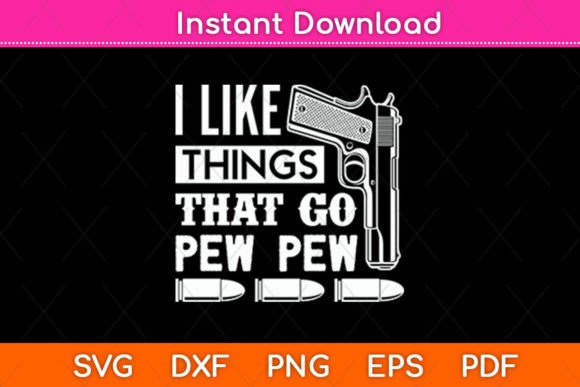
The visual personality of the I Like Things That Go Pew Pew Svg Design is undeniably playful and geek-chic. It carries a mood that appeals to gamers, sci-fi fans, and parents of energetic children. From a graphics perspective, the lines are likely clean and optimized for cutting blades, which is a positive indicator for potential digitizing. However, thread does not behave like vinyl. Where a cutter glides through sharp corners effortlessly, an embroidery needle requires strategic pathing to avoid puckering or thread breaks.
In my assessment, this design naturally belongs in the realm of casual custom apparel and novelty gifts. It feels right at home on a sweatshirt embroidery project or as a cheeky accent on a tote bag design. The phrase itself suggests a humorous tone, making it ideal for personalized gifts rather than formal wear. For a handmade product line, this graphic offers strong recognition value; it is a niche-specific statement piece that can drive buyer engagement among gaming enthusiasts or parents shopping for holiday embroidery gifts. However, because it originates as a cut file, makers must verify if a pre-digitized embroidery file exists or if they will need to convert the SVG themselves. If converting, expect to adjust node points to accommodate stitch density and prevent the design from looking too rigid on soft fabrics.
Real-World Application: The Gamer’s Tote Bag Test
To truly judge the viability of the I Like Things That Go Pew Pew Svg Design, I mentally ran through a recent client request: a custom canvas tote bag for a local gaming convention vendor. The client wanted merchandise that was durable, washable, and visually distinct from standard printed tees. This design was a top contender.
For this specific embroidery project, the challenge was the canvas texture. Canvas is unforgiving with fine details. If the original SVG contains thin, intricate lines meant for vinyl weeding, those elements would disappear or tunnel into the fabric when stitched. In this scenario, I would treat the design as an applique design or use heavy fill stitch columns to ensure visibility. The result on the finished product was a textured, high-value item that felt significantly more premium than a heat-transfer alternative. Customers at the booth responded to the tactile nature of the stitching, proving that adapting this graphic for thread adds tangible perceived value to craft business merchandise.
Navigating Fabric Constraints and Hoop Limitations
While the I Like Things That Go Pew Pew Svg Design is versatile, it demands respect for fabric physics. Not every garment is a suitable canvas for this specific aesthetic. Here is where caution is required during production:
- Stretchy Knits and Performance Wear: If applying this to a lightweight t-shirt or moisture-wicking athletic gear, the stitch density must be managed carefully. Heavy satin stitch borders on a light knit will cause distortion. Always pair this design with appropriate stabilizer, such as cut-away mesh for stretchy fabrics, to maintain shape integrity after washing.
- Small Hoop Sizes and Detailed Corners: If you are working with a 4x4 hoop size for baby embroidery or sleeve cuffs, scaling down this design may compromise legibility. Text-based graphics lose clarity when reduced below a certain threshold. Inspect small details in your software before stitching; if the letters merge, the design is too small for that specific application.
- Dark Fabrics and Contrast: This design relies on bold shapes. On dark fabric, ensure your thread colors provide sufficient contrast. A black-on-navy stitch-out will look muddy and unprofessional. Test color combinations in black and white mockups first to simulate how the human eye perceives contrast without color bias.
- Curved Surfaces: Applying this to caps or curved bags requires specialized hooping. Flat vector designs often distort when wrapped around a cylinder. You may need to arc the text or adjust the layout specifically for headwear to prevent the "pew pew" element from warping at the edges.
Professional Standards for Commercial Embroidery Success
For digital product sellers and creative entrepreneurs, professionalism hinges on consistency. Using the I Like Things That Go Pew Pew Svg Design commercially requires more than just loading a file. It requires validating the technical specs. Since the product description highlights compatibility with cutting machines, you must confirm licensing terms regarding embroidery use. Some designers restrict SVGs to vinyl/paper only, while others include commercial embroidery rights. Never assume; always check the license before listing a finished product or selling a digital embroidery file derived from this asset.
Furthermore, brand consistency matters. If your shop specializes in delicate floral nursery decor, this bold, humorous graphic might clash with your established aesthetic. Conversely, if you sell pop-culture accessories, it fits perfectly. Align the design with your target audience's expectations. For Etsy sellers, high-quality photos of the actual stitched sample are non-negotiable. Do not rely solely on printable mockup software. Buyers need to see how the thread interacts with the fabric texture to trust the quality of your handmade product.
Essential Pre-Stitch Checklist for Makers
Before committing the I Like Things That Go Pew Pew Svg Design to a final garment or bulk order, run through this practical evaluation list to protect your materials and reputation:
- Verify File Compatibility: Confirm whether you have a native embroidery file (PES, DST, JEF) or if you are importing the SVG. If importing, use professional digitizing software to assign proper stitch types rather than relying on auto-digitize features which often produce poor results on text.
- Test on Scrap Fabric First: Never stitch directly onto a sellable item without a test run. Use a scrap of the exact same fabric and stabilizer combination intended for the final project. Check for registration issues, thread breaks, or excessive density.
- Evaluate Washability: If this is for a tea towel, apron, or baby item, wash and dry the test swatch. Vinyl-inspired designs sometimes have dense fill areas that can become stiff or shrink differently than the base fabric. Ensure the finished product remains soft and functional.
- Check Licensing for Derivatives: If you plan to sell the digitized version as a digital embroidery file, ensure the original creator permits derivative works. Selling a converted file without permission violates intellectual property rights common in the Crafts and Graphics categories.
- Assess Visual Balance: Step back and view the test stitch-out from a distance. Does the design read clearly? Is the humor obvious? Sometimes what looks great on a monitor loses impact in thread. Adjust spacing or weight as needed for real-world viewing distances.
Ultimately, the I Like Things That Go Pew Pew Svg Design represents a fantastic opportunity for cross-medium creativity. By treating it with the technical respect required for textile art, makers can transform a simple cut file into a high-margin embroidered asset. Whether you are creating custom apparel for a boutique, stocking up for holiday sales, or fulfilling a specific client vision, success lies in the details. Validate your files, respect the fabric, and always prioritize the integrity of the stitch. That is how you turn a digital graphic into a beloved, tangible keepsake that customers are proud to wear and display.